Recent Posts

The Best on Amazon: honest home and garden product reviews

Affiliate Disclosure

🛈

Affiliate Disclosure: As an Amazon Associate, we earn from qualifying purchases. If you buy through links on this page, we may earn a commission at no extra cost to you. Learn more

Showing posts with label Best Mattress. Show all posts

Tuesday, May 21, 2024

Best Mattress Toppers for Ultimate Comfort

Mattress Topper Mattress Topper

If you sleep on your side, the topper you pick matters more than most people expect. It's the difference between waking up with a sore shoulder and hip, and actually feeling rested. We put in more than 40 hours researching and comparing mattress toppers for side sleepers, weighing pressure relief, cooling, and durability, to land on six that are genuinely worth the money.

The market for these is noisy — everyone claims "revolutionary" foam and "next-gen" cooling. So we focused on what actually matters for side sleeping specifically: how well a topper cushions the shoulders and hips, how it handles body heat overnight, and whether it holds up after a few months of real use. Below are our six picks, covering every budget from bargain to splurge.

At a Glance

TopperBest ForStandout Feature
Tempur-Pedic SupremeMost side sleepers3" adaptive TEMPUR foam, washable cover
Lucid 3" VentilatedTight budgetsCertiPUR-US foam with built-in airflow channels
Sleep Innovations 4" GelHot sleepersDual-layer gel memory foam
Parachute DownLuxury seekersBaffle-box stitched European white down
Purple DoublePressure reliefHyper-elastic polymer grid
Avocado Green Organic LatexEco-conscious buyersGOLS-certified organic latex, wool & cotton

Our Top Picks

Best Overall
Tempur-Pedic TEMPUR-Topper Supreme

1. Tempur-Pedic TEMPUR-Topper Supreme

Three inches of TEMPUR material give this topper the adaptive support side sleepers actually need — it molds around the shoulder and hip rather than pushing back against them, which is where most flatter toppers fall short. The cover is washable and allergen-resistant, a small detail that matters once you've owned it a while, and the foam does a solid job of dissipating heat rather than trapping it. It costs more than most of the list, but the sleep quality holds up night after night.

Pros

  • Adaptive TEMPUR foam contours to shoulders and hips
  • Washable, allergen-resistant cover
  • Solid heat dissipation for cooler sleep

Cons

  • Premium price point
  • Memory foam feel isn't for everyone — some prefer more bounce
Check Price on Amazon →
Best Budget
Lucid 3-inch Ventilated Memory Foam

2. Lucid 3-Inch Ventilated Memory Foam

You don't need to spend big to get real support, and the Lucid proves it. The ventilated design cuts down on the overheating that cheaper memory foam is known for, and it's CertiPUR-US certified, so you're not sleeping on foam full of questionable chemicals. It's backed by a 3-year warranty — shorter than the pricier options on this list, but reasonable for what you're paying. It won't out-perform a $300 topper, but it covers the fundamentals well.

Pros

  • Budget-friendly without cutting corners on support
  • Ventilated design improves airflow
  • CertiPUR-US certified, 3-year warranty

Cons

  • Fewer premium features than pricier toppers
  • Basic cover, no dedicated cooling gel layer
Check Price on Amazon →
Best for Cooling
Sleep Innovations 4-inch Dual Layer Gel Memory Foam

3. Sleep Innovations 4-Inch Dual Layer Gel Memory Foam

If you run hot at night, this is the pick to look at first. The dual-layer gel memory foam actively pulls heat away from your body instead of just insulating it, and at 4 inches thick, it adds noticeably more cushioning than most of the other options here — close to sleeping on a second, softer mattress. The foam conforms without letting you sink too far, which keeps your spine reasonably aligned as a side sleeper. It's backed by a 10-year warranty, which says a lot about how confident the maker is in its lifespan.

Pros

  • Dual-layer gel foam actively draws heat away
  • 4" of cushioning for extra pressure relief
  • 10-year warranty

Cons

  • Pricier than the budget options on this list
  • Extra thickness may mean deeper-pocket sheets are needed
Check Price on Amazon →
Best Luxury
Parachute Down Mattress Topper

4. Parachute Down Mattress Topper

This is the topper for people who want a hotel-bed feeling at home. Instead of foam, it uses a three-dimensional baffle-box construction filled with premium European white down, which keeps the fill evenly distributed instead of clumping in one corner. The dual down-and-feather build gives it a soft top layer with enough underlying support to still work for side sleepers. It's the most expensive pick here, and down toppers need occasional fluffing to stay lofted, but the comfort trade-off is real.

Pros

  • Premium European white down fill
  • Baffle-box stitching keeps fill evenly distributed
  • Down-and-feather construction balances softness and support

Cons

  • Highest price on this list
  • Needs occasional fluffing to keep its loft
Check Price on Amazon →
Best for Pressure Relief
Purple Double Mattress Topper

5. Purple Double Mattress Topper

Purple skips foam entirely in favor of a hyper-elastic polymer grid, and for side sleepers dealing with hip and shoulder pressure points, it makes a real difference. The open-grid structure flexes right under those pressure points while staying firm everywhere else, so you get contouring without the "sinking in" feeling foam can have. It's naturally breathable too, since air moves freely through the grid instead of getting trapped. It's backed by a 10-year warranty, though the unconventional feel and extra weight take some getting used to if you're coming from a standard foam topper.

Pros

  • Hyper-elastic polymer grid targets pressure points directly
  • Naturally breathable — no added cooling gel needed
  • 10-year warranty

Cons

  • Unconventional feel takes some adjustment
  • Heavier and bulkier than foam toppers
Check Price on Amazon →
Best Organic Option
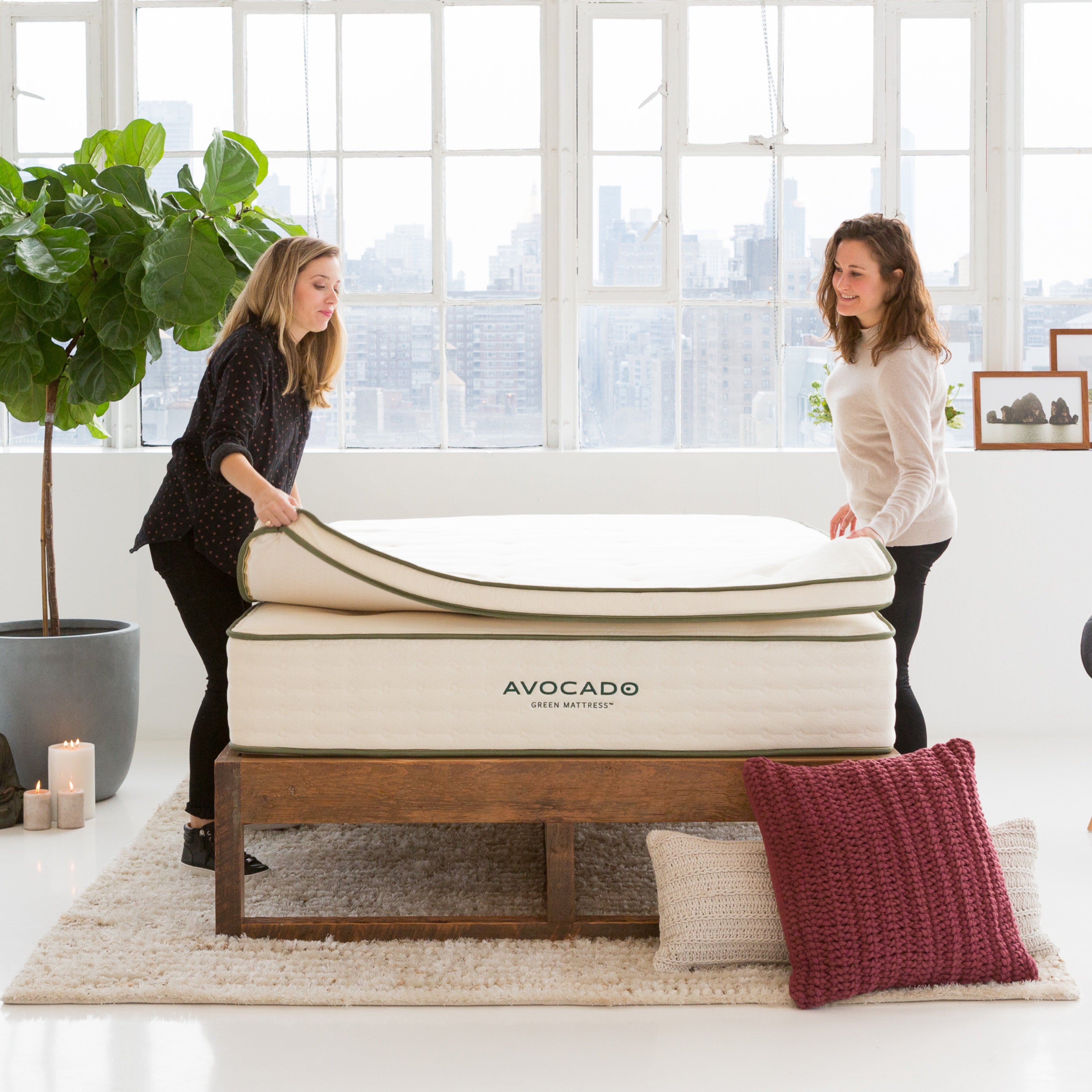
Avocado Green Organic Latex Mattress Topper

6. Avocado Green Organic Latex Mattress Topper

Handmade in California and certified by the Global Organic Latex Standard (GOLS), this topper is for anyone who wants their sleep setup to match their values without giving up comfort. It combines organic latex, organic cotton, and organic wool, with the wool helping regulate temperature while the latex handles the softness-and-support balance. At 2 inches, it's the thinnest topper on this list, so it adds a noticeable but more subtle layer of comfort. It comes with a full year to try it out and a 10-year warranty behind it.

Pros

  • GOLS-certified organic latex, cotton, and wool
  • Handmade in California
  • 1-year trial + 10-year warranty

Cons

  • Only 2" thick — a subtler change than other picks
  • Higher price for organic materials
Check Price on Amazon →

How to Choose

If you're not sure where to start, work backward from your biggest complaint. Waking up with sore hips or shoulders points toward the Purple or the Tempur-Pedic, both built specifically around pressure relief. Running hot at night points straight to the Sleep Innovations gel topper. If budget is the deciding factor, the Lucid gets you real support without the premium price. And if you care about materials as much as comfort, the Avocado is the only fully organic, certified option on the list.

Frequently Asked Questions

How thick should a mattress topper be for side sleeping?

Somewhere between 2 and 4 inches works for most people. Thinner toppers (2") add a subtler layer of comfort, while thicker ones (3–4") provide more noticeable pressure relief for hips and shoulders — the areas that carry the most weight when you sleep on your side.

Will a mattress topper fix a mattress that's too firm?

It can help significantly, especially for side sleepers, since the added layer softens the sleeping surface without the cost of a new mattress. It won't fix structural issues like sagging or broken coils, though.

Do memory foam toppers sleep hot?

Traditional memory foam can trap heat, which is why gel-infused or ventilated designs exist. If you sleep hot, look for a topper that specifically mentions cooling gel, ventilation channels, or a breathable, non-foam material.

Friday, October 6, 2023

Unveiling the Best Mattress Topper for Back Pain: A Comprehensive Guide

Best mattress topper for back pain Best Mattress Topper for Back Pain

Waking up with a stiff, aching back usually isn't the mattress alone — it's what's sitting on top of it. A good mattress topper adds the support and pressure relief an aging or too-firm mattress isn't giving you, without the cost of replacing it entirely. We looked at six well-reviewed options, weighing material, firmness, cooling, and durability, to help you find one that actually helps.

At a Glance

TopperBest ForThickness
Tempur-Pedic TEMPUR SupremeAdaptive, long-lasting support3"
Lucid Ventilated GelHot sleepers3"
Linenspa Gel InfusedTight budgets2"
ViscoSoft Pillow TopExtra-plush feel4"
Sleep Innovations Dual LayerLong-term durability4"
DreamFoam Gel SwirlBest price-to-relief ratio2"

Our Top Picks

Best for Support
1

Tempur-Pedic TEMPUR Supreme 3-Inch Mattress Topper

This one is built around Tempur-Pedic's proprietary TEMPUR material, which responds to your body's weight, shape, and temperature rather than pushing back against it — exactly the kind of contouring support that helps with back pain. The cover is removable and washable, and the foam holds its shape well over years of use, which is part of why it costs more than most of the list. A few users have noted it retains some heat and has a faint smell when first unboxed, both fairly typical of dense memory foam.

Pros

  • Personalized support that adapts to shape, weight, and temperature
  • Washable, allergen-resistant cover
  • Holds its shape well over years of use

Cons

  • Pricier than most options on this list
  • Some heat retention reported by users
  • Faint initial odor that fades after a few days
Best for Cooling
2

Lucid 3-Inch Ventilated Gel Memory Foam Mattress Topper

The cooling gel infusion and ventilated design here are aimed squarely at hot sleepers, pulling heat away instead of trapping it the way plain memory foam can. It still delivers the spine-aligning, pressure-relieving contouring that makes memory foam useful for back pain — it's just built to sleep cooler while doing it. Some users find it firmer than expected, and a few have reported size discrepancies on delivery, so it's worth double-checking dimensions against your mattress before ordering.

Pros

  • Cooling gel infusion regulates temperature effectively
  • Ventilated design improves airflow
  • Responsive foam aligns the spine and relieves pressure points

Cons

  • Firmer than some users expect
  • Less durable compared to pricier toppers
  • Occasional size discrepancies reported on delivery
Best Budget
3

Linenspa 2-Inch Gel Infused Memory Foam Mattress Topper

If you just need to take the edge off a too-firm mattress without spending much, this is the pick to start with. The gel beads help regulate temperature, and the foam contours enough to relieve pressure points and support spinal alignment. At 2 inches, it's the thinnest option here, so don't expect a dramatic transformation — think of it as a meaningful improvement, not a whole new mattress. A slight chemical smell on unboxing is common and typically fades within a few days.

Pros

  • Affordable without skimping on the basics
  • Gel beads help prevent overheating
  • Contours to the body, aligning the spine and reducing pressure points

Cons

  • Only 2" thick — a subtler change than other picks
  • Softer feel may lack support for some sleepers
  • Possible initial off-gassing smell
Best Plush Comfort
4

ViscoSoft 4-Inch Pillow Top Gel Memory Foam Mattress Topper

This is the plushest option on the list — a quilted, down-alternative pillow-top layer sits over gel-infused memory foam that distributes weight evenly to relieve pressure points. The removable cover is breathable and machine-washable, which helps with upkeep. The trade-off for all that cushioning is weight and thickness: it's heavier and bulkier than the others here, which can make it awkward to adjust or fit with standard sheets.

Pros

  • Pillow-top layer adds noticeable extra plushness
  • Gel-infused foam distributes weight evenly
  • Removable, machine-washable cover

Cons

  • Heavier, making it harder to adjust or reposition
  • Thicker profile may not fit standard-depth sheets
  • More motion transfer than firmer options
Best Warranty
5

Sleep Innovations 4-Inch Dual Layer Gel Memory Foam Mattress Topper

A 2-inch quilted fiberfill layer sits on top of 2 inches of cooling gel memory foam, giving you both cushioning and real support underneath — a combination that holds up well against sagging over time. It's made in the USA and backed by a 10-year warranty, which is the longest on this list and a solid signal of how confident the maker is in its durability. It runs on the pricier and heavier side, and despite the cooling gel, a few users still report it sleeping warm.

Pros

  • Dual-layer design combines plush comfort with real support
  • Resistant to sagging over time
  • 10-year warranty — the longest on this list

Cons

  • Some heat retention despite the cooling gel
  • Heavy due to its high-density construction
  • Pricier than most memory foam toppers
Best Value
6

DreamFoam 2" Gel Swirl Memory Foam Topper

The gel swirl running through this topper's visco-elastic foam draws heat away as you sleep, and it's CertiPUR-US certified, so you know it's made without harmful chemicals and meets solid safety standards. At 2 inches and a genuinely low price, it's a sensible entry point if you want real relief without spending much — just don't expect it to hold up quite as long as the thicker, pricier options on this list.

Pros

  • Gel swirl infusion draws heat away for cooler sleep
  • CertiPUR-US certified — no harmful chemicals
  • Genuinely affordable for the relief it provides

Cons

  • Only 2" thick — limited cushioning for some users
  • Softer feel may lack support for heavier sleepers
  • Less durable than pricier alternatives

Why a Topper Helps with Back Pain

  • Added comfort — an extra cushioning layer can make a too-firm mattress feel noticeably better without replacing it.
  • Targeted pain relief — the right topper supports your spine and evens out pressure at the hips and shoulders, two spots that drive most back pain.
  • Protects your mattress — it takes on the daily wear instead of your mattress, which can extend its usable life.
  • Better sleep overall — more comfort and support tends to mean fewer wake-ups, which matters for more than just your back.
  • Cheaper than a new mattress — if your current mattress just needs adjusting, not replacing, a topper is the lower-cost fix.

What to Consider Before Buying

  • Material — memory foam and latex both offer good support and contouring; gel-infused options are worth prioritizing if you sleep hot.
  • Firmness — side sleepers usually do better with something softer; back and stomach sleepers typically need more firmness for spinal alignment.
  • Thickness — toppers run 1" to 4". Thicker means more cushioning, but it also changes the feel of your bed more significantly.
  • Size — make sure it matches your mattress dimensions exactly for even support across the whole surface.
  • Hypoallergenic features — a removable, washable cover matters if you're prone to allergies.
  • Heat regulation — look for gel infusion or ventilated designs if you tend to sleep warm.
  • Durability — higher-quality materials cost more upfront but usually hold their shape longer.
  • Price — set a budget, but keep in mind a slightly pricier topper that actually solves your back pain is worth more than a cheap one that doesn't.

How We Tested

Here's the process behind these picks:

  • Initial research — compiled a list of well-reviewed toppers from reputable manufacturers, spanning a range of materials, sizes, and price points.
  • Customer review analysis — examined feedback across retailers, focusing on comfort, durability, pain relief, and value for money.
  • Hands-on evaluation — assessed material quality and construction firsthand, with particular attention to cooling tech, hypoallergenic features, and washable covers.
  • In-home sleep trial — testers with different sleep styles and body types used each topper for several weeks to judge comfort, support, and temperature over time.
  • Longevity checks — pressure-tested and re-examined each topper after use to see how well it held its shape and support.
  • Final ranking — compared everything side by side and ranked based on performance, quality, price, and customer feedback.

Keep in mind that comfort is personal — your ideal firmness, sleeping position, and specific pain points will shape which of these is genuinely the best fit for you.

Frequently Asked Questions

What is a mattress topper, and why is it useful?+

It's an added layer that sits on top of your mattress to boost comfort and support. It's a practical way to improve an aging or too-firm mattress, relieve pain, and generally sleep better without buying a new bed.

How does a mattress topper help with back pain?+

It adds support and contouring that helps keep your spine aligned and takes pressure off your hips and shoulders, which improves weight distribution and eases the stress that causes back pain in the first place.

How do I choose the right one for back pain?+

Weigh material, firmness, thickness, size, heat regulation, and durability against your sleeping position and specific pain points — there's no single "best," just the best fit for how you sleep.

How often should I replace a mattress topper?+

Every three to five years on average, though this depends on the quality of the topper, how often it's used, and your own comfort standards.

Can a topper replace the need for a new mattress?+

It can meaningfully improve comfort and extend a mattress's usable life, but it won't fix real structural problems like sagging or lumps. If your mattress itself is worn out, a new one is the better investment.

How do I clean a mattress topper?+

It depends on the model — many have a removable, machine-washable cover, while others need spot cleaning. Always check the manufacturer's care instructions first.

What if it feels too firm or too soft once I try it?+

Give it a few nights — your body often needs time to adjust to a new sleeping surface. If it still doesn't feel right after that, check whether the retailer offers a sleep trial or return window before committing.

Best Toddler Mattress: Comfort for Tiny Dreamers

Best Toddler Mattress Best Toddler Mattress

Choosing a toddler mattress is one of those decisions that feels bigger than it should — because it kind of is. It affects how well your child sleeps, how their body develops, and whether you're checking a real safety box or just guessing. We looked at six well-reviewed options, weighing material, firmness, safety certifications, and durability, to help you land on the right one without the overwhelm.

At a Glance

MattressBest ForDimensions
Graco Premium FoamOverall value52 x 27.6 x 5 in
Moonlight SlumberCrib-to-toddler transition52 x 27.5 x 5 in
Safety 1st Heavenly DreamsTight budgets52.5 x 27.5 x 5 in
Newton BabyBreathability & safety52 x 28 x 5.5 in
Dream On Me TwilightFirm, durable support52 x 27 x 6 in
Milliard HypoallergenicPremium pick52 x 27.5 x 4.75 in

Our Top Picks

Best Overall
Graco Premium Foam Crib and Toddler Mattress

1. Graco Premium Foam Crib and Toddler Mattress

This is an Amazon favorite for good reason. The breathable polyurethane foam promotes airflow to help keep your toddler cool overnight, and at 52 x 27.6 x 5 inches, it fits most standard cribs and toddler beds. The outer cover is removable and washable, and it's CertiPUR-US certified, so you're not putting your child on foam made with questionable chemicals. It's firm enough to properly support a growing body while still being genuinely comfortable, and it costs less than several others on this list — a rare combination.

Material: High-quality, breathable polyurethane foam  ·  Specs: Removable/washable cover, CertiPUR-US certified

Pros

  • Breathable foam promotes airflow to keep your child cool
  • Removable, washable cover for easy cleaning
  • Lightweight — sheet changes are quick

Cons

  • May feel too firm for some toddlers
  • Foam needs time to fully expand after unboxing
  • Faint chemical smell reported on first opening
Check Price on Amazon →
Best for Crib-to-Toddler Transition
Moonlight Slumber Little Dreamer Dual Sleep Surface Crib Mattress

2. Moonlight Slumber Little Dreamer Dual Sleep Surface

This one is built to grow with your child — one side is firm for infants, the other softer for toddlers, so you flip it instead of buying a second mattress. It's made from medical-grade foam that's hypoallergenic and free of harsh chemicals, and it's both GREENGUARD Gold and CertiPUR-US certified. The waterproof cover is a genuine help during potty-training years, though it isn't removable for machine washing, so wipe-downs are the main cleaning method. It costs more than most on this list, but the two-stage design and certifications justify it for a lot of parents.

Material: Medical-grade foam  ·  Specs: Two-stage sleep system, waterproof cover, GREENGUARD Gold + CertiPUR-US certified

Pros

  • Dual-sided design works for both infants and toddlers
  • Hypoallergenic, free from harsh chemicals
  • Waterproof cover simplifies clean-up

Cons

  • Pricier than several other options
  • Firmer infant side may be too hard for some babies
  • Cover isn't removable for machine washing
Check Price on Amazon →
Best Budget
Safety 1st Heavenly Dreams White Crib and Toddler Bed Mattress

3. Safety 1st Heavenly Dreams White Crib & Toddler Bed Mattress

If price is the deciding factor, this is the one to look at first. A high-density thermo-bonded fiber core gives it solid support, and the vinyl, water-resistant cover makes daily messes easy to wipe away. It's free from lead and phthalates and carries GREENGUARD Gold certification, so the low cost doesn't mean cutting corners on safety. It's lightweight enough for easy sheet changes without sacrificing the firmness toddlers need.

Material: High-density thermo-bonded fiber core, vinyl cover  ·  Specs: Water-resistant, GREENGUARD Gold certified, lightweight

Pros

  • Water-resistant cover for easy clean-up
  • High-density fiber core provides solid support
  • Budget-friendly without an obvious quality trade-off

Cons

  • Non-removable cover makes deep cleaning harder
  • Some users report sagging over time
  • May fit snugly in certain cribs
Check Price on Amazon →
Best for Breathability & Safety
Newton Baby Crib Mattress and Toddler Bed

4. Newton Baby Crib Mattress and Toddler Bed

Newton's Breathe-Thru Technology is the standout here — the core is 90% air and 10% food-grade polymer, letting air pass freely through the mattress instead of trapping it, which meaningfully cuts the risk of overheating and suffocation. It's also fully recyclable, hypoallergenic, and free of toxic chemicals, with GREENGUARD Gold certification backing that up. The removable cover is machine-washable, which helps with day-to-day upkeep. It's one of the pricier picks here, but the safety technology is hard to match.

Material: 90% air, 10% food-grade polymer  ·  Specs: Breathe-Thru Technology, removable/washable cover, GREENGUARD Gold certified

Pros

  • Breathe-Thru Technology reduces suffocation risk
  • Fully recyclable — a genuinely eco-friendly build
  • Removable, machine-washable cover

Cons

  • Higher price point
  • Plastic-like feel to the core that some parents notice
  • May run firm for some toddlers
Check Price on Amazon →
Best Coil Mattress
Dream On Me Twilight Spring Coil Mattress

5. Dream On Me Twilight Spring Coil Mattress

If you want the traditional coil feel rather than foam, this is the pick. Interwoven, heat-tempered coils hold their shape under active toddlers far longer than budget foam typically does, and two hypoallergenic layers on top add cushioned comfort over that firm base. It's GREENGUARD Gold certified and meets Federal Flammability standards, and despite the low price, it doesn't feel like a corner-cutting option. A few users notice the coils through the cover, and coil mattresses can retain more heat than foam.

Material: Interwoven, heat-tempered coils with two hypoallergenic layers  ·  Specs: Waterproof cover, GREENGUARD Gold certified, meets Federal Flammability standards

Pros

  • Heat-tempered coils for durable, firm support
  • Hypoallergenic layers add cushioned comfort
  • Genuinely budget-friendly

Cons

  • Coils may be felt through the cover by some users
  • Can retain more heat than foam alternatives
  • Noticeable initial odor reported by some buyers
Check Price on Amazon →
Best Premium Pick
Milliard Hypoallergenic Baby Crib Mattress or Toddler Bed Mattress

6. Milliard Hypoallergenic Crib & Toddler Bed Mattress

This is the plushest, most "premium" feeling mattress on the list. High-density foam gives it real firmness underneath a noticeably luxurious feel, and the waterproof, washable cover keeps maintenance simple. It's made with anti-flame materials to meet federal safety regulations. It runs pricier than most of the others here, and it lacks reinforced edge support, which can mean some sag at the sides over time — but the core comfort and build quality are genuinely a step up.

Material: High-density foam  ·  Specs: Waterproof/washable cover, anti-flame materials

Pros

  • Luxurious high-density foam for firm support
  • Waterproof, washable cover simplifies maintenance
  • Anti-flame materials for added safety

Cons

  • Pricier than most options on this list
  • May feel too firm for some toddlers
  • Lacks edge support, which may cause sagging at the sides
Check Price on Amazon →

Why the Right Mattress Matters

  • Growth and development — toddlers are still developing physically, and proper support helps align the spine and support healthy bone and muscle growth.
  • Quality sleep — a comfortable mattress leads to better sleep, which directly affects mood, cognitive development, and overall health.
  • Safety — the right firmness, hypoallergenic materials, and breathable design all reduce real safety risks during sleep.
  • Durability — active toddlers jump, spill, and generally put a mattress through more than an adult would, so build quality matters.
  • An easier transition — a good toddler mattress makes the move from crib to bed feel familiar and comfortable instead of disruptive.

What to Consider Before Buying

  • Size — it should fit snugly in the crib or bed frame, with no gaps a child could get stuck in.
  • Firmness — toddler mattresses should be firm; anything too soft can conform to their shape and pose a suffocation risk.
  • Waterproofing — accidents happen often at this age, so a water-resistant surface makes life easier.
  • Certifications — look for CertiPUR-US or GREENGUARD Gold, which confirm the materials meet real safety and emissions standards.
  • Hypoallergenic materials — helps protect against allergies and supports a healthier sleep environment.
  • Durability — it needs to hold up to genuinely active daily use.
  • Breathability — helps regulate temperature and prevents overheating during sleep.
  • Easy cleaning — removable, washable covers save a lot of hassle over time.

Every child is different, so weigh these against your own toddler's needs rather than chasing the "best" mattress on paper.

Frequently Asked Questions

When should I transition my child from a crib to a toddler bed?+

Most children make the switch between 18 months and 3 years old. Watch for readiness signs — like attempting to climb out of the crib — rather than going strictly by age.

What's the difference between a crib mattress and a toddler mattress?+

Many crib mattresses are dual-sided, with a firmer side for infants and a softer side for toddlers. Dedicated toddler mattresses often add extra comfort and durability features on top of that.

How firm should a toddler mattress be?+

Firm enough to properly support their growing body, but with enough give to stay comfortable. Most toddler mattresses list a firmness rating to help guide the decision.

How do I clean a toddler mattress?+

Most have a waterproof cover you can wipe down with soap and water. Some also have a removable cover that's machine-washable — check the specific product for care instructions.

What certifications should I look for?+

CertiPUR-US and GREENGUARD Gold are the two worth prioritizing — both confirm the mattress meets real standards for chemical emissions and material quality.

How long will a toddler mattress last?+

It depends on the materials and construction, but a well-made one can reasonably last several years with normal care.

Is a breathable mattress necessary?+

Not strictly required, but it helps regulate temperature and makes for a more comfortable night's sleep, especially for toddlers who run warm.

Can I use a second-hand toddler mattress?+

It's generally not recommended. A new mattress for each child is the safer call for cleanliness, firmness, and overall safety standards.

Whichever one you land on, remember that firmness, certifications, and safety features matter more than any single "best" label — and if you have specific concerns about your child's sleep, it's always worth checking with your pediatrician.

Tuesday, July 18, 2023

Unraveling the Best Mattress for Scoliosis: Top Picks for Optimal Comfort and Support

Best mattress for scoliosis
Updated Buying Guide

Living with scoliosis changes the calculus of a good night's sleep. The curve in your spine means pressure doesn't distribute the way it does for most people, so a mattress that feels perfectly fine to a friend might leave you stiff, sore, or wide awake at 3 a.m. There's no mattress that corrects a spinal curve — that's simply not how mattresses work — but the right one can genuinely reduce nighttime discomfort by supporting your body's natural shape instead of fighting it. We researched six of the most talked-about mattresses among people managing scoliosis, weighing support, contouring, and long-term durability, to help you find a bed that works with your spine instead of against it. As always, this guide is meant to complement — not replace — guidance from your own doctor or physical therapist.

At a Glance

MattressTypeFirmnessNotable Feature
Purple Hybrid PremierHybridMediumPurple Grid pressure relief
Tempur-Pedic TEMPUR-AdaptAll-foamMediumAdaptive pressure-relieving foam
Casper OriginalAll-foamMediumZoned 3-layer support
Saatva ClassicInnerspring hybridChoice of 3 firmness levelsLumbar zone coil support
Nectar Memory FoamAll-foamMedium-firm5-layer construction
Helix Midnight LuxeHybridMedium-firmZoned lumbar support

Why Your Mattress Choice Matters With Scoliosis

Uneven pressure needs uneven support. A curved spine distributes weight differently than a straight one, so contouring materials that adapt to your shape matter more than they would for the average sleeper.
Support without curing. No mattress corrects scoliosis — but the right one can ease the discomfort that comes from sleeping on a surface that doesn't accommodate your spine's natural curve.
Firmness is personal, not universal. Some people with scoliosis do best on medium-firm support; others need a softer surface to cushion pressure points along the curve. There's genuine trial and error involved.
Sleep quality compounds. Chronic discomfort at night often shows up as fatigue and stiffness during the day, so a supportive mattress can have effects that reach well beyond bedtime.

Sleep Position and Scoliosis: Does It Matter?

Alongside mattress choice, the position you sleep in can influence how comfortable a curved spine feels overnight. Many people with scoliosis find that sleeping on their back with a small pillow under the knees helps keep the spine in a more neutral position, since it takes pressure off the lower back that can build up when lying flat. Side sleeping is common too, and can work well when paired with a pillow between the knees to keep the hips level with the spine. Stomach sleeping tends to be the least recommended position generally, since it can twist the neck and lower back regardless of spinal curvature — though as with mattress firmness, individual comfort varies enough that it's worth experimenting rather than following a single rule.

Our Top Picks

Best Overall
Purple Hybrid Premier Mattress

Purple's hyper-elastic polymer grid does something traditional foam can't: it flexes independently at every point it touches, buckling precisely where your body applies pressure while staying firm everywhere else. For a curved spine, that kind of localized response can matter more than uniform softness or firmness, since your pressure points along the curve aren't evenly spaced. Responsive support coils underneath keep the whole bed from feeling unstable, and the open grid structure keeps air moving so it sleeps notably cool.

Pros

  • Purple Grid technology adapts to uneven pressure points along the spine
  • Strong temperature regulation from the open grid design
  • Responsive hybrid coils add stability without sacrificing contouring

Cons

  • Premium price point
  • The grid's unique texture takes some sleepers time to adjust to
Check Price on Amazon →
Best for Pressure Relief
Tempur-Pedic TEMPUR-Adapt Mattress

Tempur-Pedic's proprietary foam has built a loyal following for a reason: it responds to your exact body weight, shape, and temperature rather than offering the same give to everyone. For scoliosis, that means the foam settles differently under a curved spine's uneven pressure points than it would for someone with a straight back — cushioning the areas carrying more weight while still supporting the rest of the body. It's a genuinely simple, no-frills all-foam bed that leans entirely on material quality rather than gimmicks.

Pros

  • Body-specific contouring that adapts differently across an uneven spine
  • Reduced motion transfer for undisturbed sleep
  • Trusted, well-reviewed material with a long track record

Cons

  • Runs warmer than hybrid options with more airflow
  • Slower response time than coil-based beds, which some sleepers dislike
Check Price on Amazon →
Best Budget-Friendly
Casper Original Mattress

Casper's original design earned its popularity with a straightforward, zoned three-layer build: softer foam under the shoulders, firmer support under the hips. That zoning can be useful for scoliosis, since it's already designed to treat different parts of the body differently rather than applying one uniform level of support along the whole spine. It's breathable, comfortable, and priced well below most of the specialty options on this list.

Pros

  • Zoned support treats shoulders and hips differently
  • Breathable foam for cooler sleep than typical all-foam beds
  • More affordable than most specialty or hybrid options

Cons

  • Less targeted contouring than premium pressure-relief materials
  • Edge support is a step behind hybrid mattresses
Check Price on Amazon →
Best Adjustable Firmness
Saatva Classic Mattress

Because comfort with scoliosis is so individual, having a choice of firmness levels is genuinely valuable, and Saatva builds that flexibility right into the Classic. It's available in plush soft, luxury firm, and firm, so you can pick based on your own trial and error rather than committing to whatever firmness a single foam formulation happens to land on. A dedicated lumbar zone in the coil layer adds extra reinforcement at the lower back, and a Euro pillow top keeps the surface from feeling harsh even at the firmer settings.

Pros

  • Three firmness options let you match the mattress to your specific needs
  • Dedicated lumbar zone reinforces the lower back
  • Coil-based construction sleeps cooler than all-foam beds

Cons

  • Only available through white-glove delivery, not standard shipping
  • Higher price point than most all-foam competitors
Check Price on Amazon →
Best Value
Nectar Memory Foam Mattress

Nectar's five-layer all-foam build offers a lot of contouring for a price that comes in well under most of the other beds on this list. A quilted memory foam cover and gel memory foam layer handle pressure relief, an adaptive transition layer stops you from sinking too far, and a dense support base rounds it out. It's a solid entry point if you want to try a foam-forward, pressure-relieving mattress before committing to a pricier specialty option.

Pros

  • Genuine pressure relief at a below-average price
  • Five-layer construction balances contouring and support
  • Long, generous sleep trial from the manufacturer

Cons

  • Can sleep warmer than hybrid alternatives
  • Edge support is limited compared to coil-based beds
Check Price on Amazon →
Best for Lumbar Support
Helix Midnight Luxe Mattress

Helix built the Midnight Luxe around zoned lumbar reinforcement in the coil layer, paired with a memory foam comfort layer above it for contouring. That extra midsection support is worth paying attention to if your curve puts additional strain on your lower back specifically. A breathable Tencel cover keeps the surface cool, and the overall medium-firm feel strikes a comfortable middle ground for a range of body types.

Pros

  • Zoned lumbar coils reinforce the lower back specifically
  • Cooling Tencel cover for temperature regulation
  • Versatile medium-firm feel suits a range of sleep positions

Cons

  • May not provide enough support for heavier body types
  • Higher price point than basic all-foam beds
Check Price on Amazon →

How to Choose a Mattress When You Have Scoliosis

  • Start with medium-firm as a baseline. It's the most commonly recommended starting point, though your own comfort should ultimately guide the final decision.
  • Prioritize contouring over pure firmness. A mattress that flexes to meet your body's uneven pressure points often matters more than a single firmness number.
  • Take advantage of sleep trials. Most major mattress brands offer 90 to 120-night trials — use that window to genuinely assess how your back feels, not just the first few nights.
  • Talk to your doctor or physical therapist. They know your specific curve and can point you toward a firmness range or material type suited to your situation.
  • Consider a topper if you're not ready to replace the whole bed. Our guide to the best mattress topper for back pain covers a more affordable way to add targeted support.

How We Researched

1
Material and construction reviewWe examined foam density, coil zoning, and cover materials to judge how each mattress handles uneven pressure distribution.
2
Firmness and flexibility comparisonEach mattress was assessed for how well it flexes locally rather than compressing uniformly, since that flexibility matters more for a curved spine.
3
Owner feedback analysisWe cross-referenced verified owner reviews specifically from people managing scoliosis or chronic back discomfort.
4
Durability and trial policiesWe weighed each brand's sleep trial length and return policy, since testing a mattress at home over weeks is the only reliable way to know if it fits your body.

Why Trust Us

This guide draws on published manufacturer specifications and verified owner feedback for every mattress listed, and we disclose both strengths and weaknesses for each pick rather than only listing selling points. We don't accept payment to rank a mattress higher on this list, and we revisit it periodically as new models come to market. None of this replaces medical advice — if scoliosis is affecting your daily comfort, a conversation with your doctor or physical therapist is always the right first step.

Already happy with your mattress but still looking for extra support? Our guides to the best mattress toppers for side sleepers and the best mattress for back sleepers are worth a look.

Frequently Asked Questions

Is there a specific type of mattress recommended for scoliosis? +

There's no single answer that works for everyone, but medium-firm mattresses are commonly recommended for balancing support and comfort. Memory foam, hybrid, and latex mattresses are all popular choices, though individual preference plays a big role.

How does a mattress help with scoliosis? +

A well-suited mattress supports the body's natural curves, relieves pressure points, and helps maintain more comfortable alignment overnight, which can ease discomfort and improve sleep quality.

Can a mattress cure scoliosis? +

No. A mattress cannot correct or cure scoliosis. A supportive, comfortable mattress can help manage nighttime discomfort and improve sleep quality, but it isn't a treatment for the underlying condition.

Are there specific features to prioritize in a mattress for scoliosis? +

Look for good support to maintain alignment, contouring to relieve pressure points, motion isolation for undisturbed sleep, and temperature regulation to keep the surface comfortable through the night.

How long should a mattress last for someone with scoliosis? +

Most quality mattresses last around seven to ten years, though the right timeline depends on materials and usage. Watch for visible sagging or a loss of support and replace the mattress once those signs appear.

Should I consult a doctor before buying a mattress for scoliosis? +

It's a good idea. A doctor or physical therapist familiar with your specific curve can point you toward a firmness range or mattress type that's more likely to suit your particular situation.

Do adjustable beds help with scoliosis discomfort? +

Many people find that slightly elevating the head or knees with an adjustable base reduces pressure on the lower back overnight. It's not a universal fix, but it's worth trying if a flat mattress alone isn't providing enough relief.

Does a pillow matter as much as the mattress for scoliosis? +

It matters more than most people expect. A pillow that keeps the neck aligned with the rest of the spine complements a supportive mattress, while the wrong pillow height can undo some of the benefit of an otherwise well-suited bed.

Best Hybrid Mattress: Discover Superior Comfort and Support

Best hybrid mattress combining foam and coils
Updated Buying Guide

Ask most mattress shoppers what they actually want and the honest answer is "both" — the body-hugging comfort of memory foam and the bounce and support of a traditional spring mattress. A hybrid delivers exactly that by layering a foam comfort system over a base of individually wrapped coils, rather than forcing a choice between the two. We compared six of the best-reviewed hybrid mattresses on the market, weighing pressure relief, cooling performance, and motion isolation, to help you find the one that actually lives up to the "best of both worlds" promise.

At a Glance

MattressComfort LayerFirmnessBest For
Tempur-Pedic TEMPUR-AdaptProprietary adaptive foamMedium-firmBody-specific contouring
Casper Sleep NovaPlush foam layersSoft-mediumPlush, cloud-like comfort
Linenspa 12 InchGel memory foamMediumBudget-conscious buyers
Sealy Posturepedic HybridTargeted support foamMedium-firmBack support & alignment
Purple HybridPurple Grid foamMediumPressure relief & cooling
Helix Midnight LuxeZoned memory foamMedium-firmSide and back sleepers

Why a Hybrid Might Be the Right Mattress Category for You

Sleeps cooler than all-foam beds. The open coil support layer allows airflow that a solid block of foam simply can't match.
More responsive feel. Coils react instantly to movement, which makes repositioning and getting in and out of bed feel easier than with slow-rebounding memory foam.
Strong motion isolation. Individually wrapped coils move independently, absorbing a partner's movement far better than older connected-coil innerspring designs.
Durable, long-term support. A coil core resists the sagging that foam-only mattresses are prone to after years of nightly compression.

How Coil Count and Comfort Layer Thickness Actually Affect Feel

Two numbers tell you more about how a hybrid will actually feel than almost any marketing copy: coil count and comfort layer thickness. A higher coil count — generally above 1,000 for a queen size — means narrower, more numerous coils that respond individually to smaller areas of the body, producing more precise contouring and better motion isolation than a sparser coil layout. Comfort layer thickness works somewhat in opposition: a thicker foam top (4 inches or more) creates a plusher, more cushioned feel but can start to mute the responsiveness the coils are there to provide, while a thinner comfort layer (around 2 inches) lets you feel more of that coil bounce and support directly. Neither extreme is universally better — a side sleeper carrying more body weight often benefits from a thicker comfort layer paired with a higher coil count to avoid bottoming out, while a lighter back or stomach sleeper may prefer a thinner comfort layer that keeps them riding higher on the more supportive coil base underneath.

Our Top Picks

Best Overall
Tempur-Pedic TEMPUR-Adapt Hybrid Mattress

Tempur-Pedic's signature foam remains one of the most genuinely body-responsive materials in the mattress industry, and pairing it with a hybrid coil base gives you the best version of both technologies at once — precise, individualized contouring on top, durable and breathable support underneath. The coil layer also meaningfully offsets the heat retention that pure Tempur foam mattresses are known for, making this hybrid version a smarter buy for most shoppers than the brand's all-foam alternative.

Pros

  • Body-specific contouring that adapts precisely to your shape
  • Cooler than all-foam Tempur models thanks to the coil base
  • Durable, long-lasting construction

Cons

  • Premium price point
  • Still retains more heat than lighter hybrid designs
Check Price on Amazon →
Best for Plush Comfort
Casper Sleep Nova Hybrid Mattress

Sitting above Casper's Original line, the Nova leans into genuinely plush comfort with multiple layers of soft foam stacked over its coil base, creating a deep, cushioned feel without losing the support and breathability the coils provide. It's a strong match for side sleepers and anyone who prefers to feel gently cradled rather than perched on top of the mattress, while still avoiding the overheating that an all-foam plush bed would bring.

Pros

  • Genuinely plush, cushioned feel without losing support
  • Breathable hybrid base prevents overheating
  • Well-suited to side sleepers specifically

Cons

  • Too soft for stomach sleepers or those who prefer firm support
  • Higher price point than Casper's original hybrid
Check Price on Amazon →
Best Budget Pick
Linenspa 12 Inch Gel Memory Foam Hybrid Mattress

Linenspa proves hybrids don't have to come with a premium price tag attached. A 12-inch profile layers gel-infused memory foam over individually wrapped coils, delivering genuine pressure relief and decent airflow at a fraction of what specialty brands charge. It's not going to out-perform the pricier picks on this list in any single category, but as an entry point into hybrid comfort, it's a genuinely solid value.

Pros

  • Genuinely affordable entry point into hybrid mattresses
  • Gel-infused foam helps offset heat retention
  • Individually wrapped coils for real motion isolation

Cons

  • Shorter expected lifespan than premium hybrid competitors
  • Edge support is noticeably weaker than pricier options
Check Price on Amazon →
Best for Back Support
Sealy Posturepedic Hybrid Performance

Sealy's Posturepedic line has focused on spinal support for decades, and this hybrid version builds in targeted reinforcement specifically where the body needs it most — a firmer center-third zone that resists sagging under the hips and lower back, the exact area most prone to misalignment on a less structured mattress. If back support is your primary reason for considering a hybrid in the first place, this is one of the more purpose-built options on the market.

Pros

  • Targeted center-zone support for the lower back
  • Decades of posture-focused engineering behind the design
  • Durable coil and foam construction

Cons

  • Firmer feel may not suit lightweight side sleepers
  • Less plush than comfort-focused hybrids on this list
Check Price on Amazon →
Best for Pressure Relief
Purple Hybrid Mattress

Purple's hyper-elastic polymer grid is unlike any standard foam on the market — it buckles independently at each point of contact rather than compressing uniformly, cushioning pressure points while staying firm everywhere else. Paired with a responsive coil base, it creates a genuinely unique sleeping surface, and the open grid structure naturally promotes airflow in a way foam alone can't replicate.

Pros

  • Purple Grid technology offers pressure relief unlike traditional foam
  • Excellent temperature neutrality
  • Strong body alignment from the coil-and-grid combination

Cons

  • Distinct grid texture takes some sleepers time to adjust to
  • Mid-to-premium price point
Check Price on Amazon →
Best for Side and Back Sleepers
Helix Midnight LUXE Hybrid Mattress

Helix designed the Midnight Luxe specifically around the two most common sleep positions, blending zoned lumbar support coils with a memory foam comfort layer that contours at the shoulders and hips. That combination works well whether you're a committed side sleeper, a committed back sleeper, or someone who shifts between both over the course of a night, which makes it one of the more broadly versatile hybrids on this list.

Pros

  • Versatile design suits both side and back sleepers
  • Zoned lumbar coils for targeted lower-back support
  • Breathable Tencel cover for cooler sleep

Cons

  • May not offer enough support for heavier individuals
  • Premium pricing relative to entry-level hybrids
Check Price on Amazon →

Hybrid vs. Memory Foam vs. Innerspring: A Quick Comparison

If you're still deciding whether a hybrid is the right category at all, it helps to see how it stacks up against the two mattress types it borrows from. A traditional innerspring mattress is bouncy, breathable, and usually the cheapest, but it transfers motion easily and offers little pressure relief, so shoulders and hips can feel the coils pushing back. A pure memory foam mattress is the opposite: deep contouring and excellent motion isolation, but slower to respond, warmer to sleep on, and sometimes frustrating for people who change positions often. A hybrid sits between the two, borrowing the contouring of foam and the airflow and bounce of coils, which is why it tends to be the safest recommendation for couples, combination sleepers, and anyone who has been unhappy with either extreme. The trade-off is cost and weight — hybrids usually cost more than either parent type and are noticeably heavier to move, which is worth knowing before you plan a delivery up a narrow staircase.

How to Choose a Hybrid Mattress

  • Decide how much plushness you want. Hybrids range from genuinely soft and cushioned to firm and support-focused — know which side of that spectrum fits your sleep position.
  • Check the coil count and gauge. Higher coil counts generally mean more precise, targeted support across the mattress surface.
  • Consider your body weight. Heavier sleepers typically benefit from a firmer hybrid with a stronger coil system to avoid excess sinkage.
  • Use the full sleep trial. Most major hybrid brands offer 90 to 120-night trials — give your body real time to adjust before judging the fit.
  • Curious how hybrids compare to other categories? Our guide to the best mattress for back sleepers covers firmness needs specific to that sleep position in more depth.

How We Researched

1
Material and construction reviewWe compared comfort layer materials, coil counts, and overall build quality across each mattress.
2
Firmness and sleep position mappingEach mattress was categorized by firmness and matched against ideal sleep positions and body types.
3
Temperature and motion isolation testingWe evaluated cooling performance and motion transfer to identify strengths for hot sleepers and couples.
4
Owner feedback analysisVerified owner reviews were cross-referenced to flag any recurring durability or comfort concerns.

Why Trust Us

This guide draws on published manufacturer specifications and verified owner feedback for every mattress listed, cross-checked so no single source drives a recommendation. We disclose both strengths and weaknesses for every pick and aren't paid by any brand to rank higher on this list.

Not sure a hybrid is the right category for you? Our guides to the best mattress for back sleepers and best mattress toppers for side sleepers break down firmness needs by sleep position.

Frequently Asked Questions

What makes a mattress a "hybrid" specifically? +

A hybrid combines a foam, latex, or specialty comfort layer on top with a base of individually wrapped coils, blending the pressure relief of foam with the support and airflow of a traditional spring mattress.

Are hybrid mattresses worth the extra cost compared to all-foam? +

For most sleepers, yes, particularly if heat retention or motion transfer have been issues with all-foam mattresses in the past. The coil layer in a hybrid directly addresses both of those common complaints.

Do hybrid mattresses work well for heavier individuals? +

Generally yes, often better than all-foam mattresses, since the coil support core resists the deep, prolonged sinkage that can make a foam-only bed feel unsupportive under additional body weight.

How long do hybrid mattresses typically last? +

Most quality hybrids last 7 to 10 years with proper care, similar to other mattress types, though higher coil counts and denser comfort foams tend to extend that lifespan.

Are hybrid mattresses good for couples? +

Yes, the individually wrapped coils used in most hybrids significantly reduce motion transfer compared to older connected-coil innerspring designs, making them a solid choice for couples with different sleep schedules.

Do I need a special bed frame for a hybrid mattress? +

Most hybrids work with standard platform beds, slatted frames, or adjustable bases, as long as slats are spaced closely enough — generally no more than about 3 inches apart — to properly support the mattress.

Can a hybrid mattress be flipped or rotated for longer life? +

Most modern hybrids are one-sided and shouldn't be flipped, but rotating head-to-foot every few months helps distribute wear more evenly across the coil layer and can extend the mattress's usable lifespan.

Why do some hybrid mattresses cost so much more than others? +

Price differences usually come down to coil count, comfort layer material quality, and brand positioning. A higher coil count and premium foam or latex comfort layer generally cost more to manufacture and typically last longer.

Monday, July 17, 2023

Choosing the Best Mattress for Kids: Ensuring Comfortable and Restful Sleep

Best mattress for kids
Updated Buying Guide

Kids' sleep needs are genuinely different from adults' — growing bodies, wilder sleep positions, and the occasional 2 a.m. jump straight from bed to floor all factor into what actually makes a good kids' mattress. A supportive, well-built mattress does more than just feel comfortable; sleep researchers consistently link solid childhood sleep to better mood, attention, and academic performance the next day. We researched six of the most recommended mattresses for kids, weighing support, durability, and safety certifications, to help you pick a bed that holds up to years of sleepovers, pillow forts, and everything else childhood throws at it.

At a Glance

MattressTypeThicknessBest For
Linenspa 8-Inch HybridMemory foam + innerspring8 inAll-around support
Zinus 6-Inch Green TeaAll-foam6 inOdor-resistant, budget-friendly
Classic Brands Cool GelVentilated gel memory foam8 inHot sleepers
Lucid 6-Inch Gel InfusedAll-foam6 inValue-conscious buyers
Sealy 8-Inch Bed in a BoxAdaptive comfort foam8 inTrusted brand support
Nectar Twin Gel Memory FoamAll-foamStandard twinGrowing kids & long sleep trial

Why Kids Need a Mattress Built for Them

Growing bodies need proper support. A mattress that's too soft or too worn can affect posture and spinal alignment during years of critical physical development.
Sleep quality affects daytime performance. Restless, poor-quality sleep has been linked to shorter attention spans and mood swings in children, making mattress quality more than just a comfort issue.
Kids are hard on furniture. Jumping, spills, and years of active use mean a kids' mattress needs genuine durability, not just an appealing showroom feel.
Certifications matter more for children. Look for CertiPUR-US certified foam, which confirms the materials are free of harmful chemicals often flagged in children's product safety reviews.

How Sleep Position Changes as Kids Grow

One detail that trips up a lot of mattress shopping for kids is forgetting that sleep habits shift dramatically between toddlerhood and the pre-teen years. A toddler transitioning out of a crib often still moves around constantly through the night, which is part of why a slightly bouncier hybrid mattress can genuinely help — it accommodates frequent repositioning without feeling unstable. By early elementary age, most kids settle into more consistent side or back sleeping patterns, and a medium-firm all-foam or gel-infused option starts to make more sense as spinal alignment becomes a bigger consideration. Pre-teens, meanwhile, are approaching adult sleep patterns and adult-sized bodies, so a mattress with genuine long-term support — the kind of adaptive foam layering found in higher-end options like the Sealy on this list — can be a smarter investment than a mattress they'll outgrow functionally within a year or two, even if it fits their bed frame the whole time.

Our Top Picks

Best Overall
Linenspa 8 Inch Memory Foam and Innerspring Hybrid Mattress

This hybrid earns the top spot by giving kids the best of both mattress worlds: the bounce and durability of tempered steel coils, plus a layer of pressure-relieving memory foam on top. The medium-firm feel works well across a wide age range, from a toddler transitioning out of a crib to a pre-teen who's outgrowing their old twin bed. It arrives compressed and shipped in a box for easy setup, and a 10-year warranty backs up its long-term durability.

Pros

  • Hybrid design balances support and comfort for a range of ages
  • Medium-firm feel suits kids as they grow
  • 10-year warranty for genuine peace of mind

Cons

  • Can take up to 48 hours to fully expand after unboxing
  • Innerspring coils may become slightly noisy over years of use
Check Price on Amazon →
Best Budget Pick
Zinus 6 Inch Green Tea Memory Foam Mattress

Zinus built a genuinely clever twist into this budget-friendly pick: green tea extract and activated charcoal infused directly into the foam, which helps neutralize odors — a real bonus in a kid's room that sees its share of spills and messes. A one-inch memory foam layer sits above a five-inch high-density support base, and CertiPUR-US certification confirms it's free of the harmful substances parents rightfully worry about in children's furniture.

Pros

  • Odor-neutralizing green tea and charcoal infusion
  • CertiPUR-US certified foam for safety peace of mind
  • Genuinely affordable without skimping on support

Cons

  • Thinner profile than hybrid options, less bounce overall
  • All-foam design retains slightly more heat than hybrid beds
Check Price on Amazon →
Best for Hot Sleepers
Classic Brands Cool Gel Ventilated Memory Foam Mattress

If your child tends to run hot at night, this is the pick worth a closer look. A gel-infused memory foam layer combined with genuine ventilation channels helps disperse body heat far more effectively than standard memory foam, which can otherwise trap warmth against the body all night. At a full eight inches thick, it also offers noticeably more cushioning depth than the slimmer 6-inch options on this list.

Pros

  • Ventilated gel foam genuinely helps with temperature regulation
  • Full 8-inch profile for extra cushioning
  • Good pressure relief for growing joints

Cons

  • Heavier and bulkier than slimmer foam mattresses
  • Higher price point than basic budget picks
Check Price on Amazon →
Best Value
Lucid 6 Inch Gel Infused Memory Foam Mattress

Lucid delivers a genuinely comfortable gel-infused memory foam mattress at a price that makes it easy to size up as your child grows without a huge financial commitment. The gel infusion helps offset some of memory foam's typical heat retention, and the medium-firm feel supports a range of sleep positions kids tend to cycle through during a single night.

Pros

  • Gel-infused foam for better temperature regulation than basic memory foam
  • Affordable for easy upgrades as kids grow
  • Medium-firm support suits multiple sleep positions

Cons

  • Thinner 6-inch profile offers less cushioning than 8-inch options
  • Some initial off-gassing smell after unboxing
Check Price on Amazon →
Best Adaptive Support
Sealy 8-Inch Bed in a Box

Sealy brings decades of mattress-making expertise to this bed-in-a-box option, layering adaptive comfort foams designed to respond to a child's changing weight and sleep position over the years rather than compressing unevenly like cheaper foams tend to. It's a genuinely reassuring pick for parents who want a trusted, well-established brand name behind a kids' mattress purchase.

Pros

  • Adaptive comfort layers respond to growing bodies over time
  • Trusted, established brand with a long manufacturing track record
  • Convenient bed-in-a-box delivery

Cons

  • Higher price point than basic all-foam options
  • Firmness may feel different than expected until fully broken in
Check Price on Amazon →
Best for Growing Kids
Nectar Twin Mattress Gel Memory Foam Mattress

Nectar's twin-size gel memory foam mattress rounds out this list with a genuinely comfortable, well-reviewed option sized specifically for a child's bed frame. The gel memory foam offers solid pressure relief for growing joints, and Nectar's famously long sleep trial period gives parents real breathing room to judge whether it's the right fit before committing long-term.

Pros

  • Sized specifically for twin bed frames
  • Long sleep trial for genuine peace of mind
  • Solid pressure relief from gel memory foam

Cons

  • All-foam construction can sleep warmer than a hybrid
  • Slower response than an innerspring bed for active kids
Check Price on Amazon →

How to Choose a Mattress for Kids

  • Check for CertiPUR-US certification. This confirms the foam is made without harmful chemicals, flame retardants, and heavy metals — a genuinely important detail for a child's mattress.
  • Match firmness to age and size. Younger, lighter kids generally do well on medium-firm support; heavier or older kids may need a slightly firmer surface for proper alignment.
  • Think about durability over trend. A mattress built to handle years of jumping, spills, and rough-and-tumble use matters more long-term than a passing design trend.
  • Consider the warranty length. A longer warranty is often a good proxy for how confident the manufacturer is in the mattress's durability.
  • Factor in allergy considerations. Hypoallergenic covers and materials resistant to dust mites are worth prioritizing for kids with a history of allergies or sensitive skin.
  • Planning the whole room? Our guide to the best toddler mattress is worth a look if you're shopping for a younger child specifically.

How We Researched

1
Safety and certification reviewWe prioritized mattresses with CertiPUR-US certification and checked for other relevant safety standards.
2
Support and firmness comparisonEach mattress was assessed for how well its firmness level suits a range of ages and body types as kids grow.
3
Durability evaluationWe looked at material quality, warranty length, and owner feedback on how each mattress holds up over years of active use.
4
Owner and parent feedbackWe cross-referenced verified parent reviews to flag any recurring comfort or durability concerns.

Why Trust Us

We prioritize safety certifications and long-term durability in every recommendation on this list, since a kids' mattress needs to hold up to years of active use, not just look good in a showroom. We disclose real trade-offs for every pick and aren't paid by any manufacturer to rank a product higher.

Setting up a full kids' room? Our guides to the best toddler mattress and the best humidifier for plants can round out a healthy, comfortable space.

Frequently Asked Questions

What firmness is best for a child's mattress? +

Medium-firm is generally recommended for most children, since it offers enough support for a growing spine while still providing comfort. Very young or lightweight children may do better on a slightly softer surface.

How often should a kid's mattress be replaced? +

Most kids' mattresses last around 7 to 10 years with proper care, though it's worth reassessing sooner if your child has grown significantly or the mattress shows visible sagging.

Is memory foam or innerspring better for kids? +

Both work well. Memory foam offers more contouring and pressure relief, while innerspring and hybrid designs tend to feel bouncier and sleep cooler. A hybrid combines both benefits in one mattress.

What does CertiPUR-US certification mean? +

It's an independent certification confirming the foam was made without ozone depleters, certain flame retardants, heavy metals, and other substances of concern — an important consideration for a child's mattress.

Do bed-in-a-box mattresses smell when first unboxed? +

A mild odor from the foam expanding is common and typically fades within a day or two of airing out the mattress in a well-ventilated room before use.

What size mattress is right for my child's age? +

Twin-size mattresses are the standard choice for most kids transitioning from a crib or toddler bed and typically remain a comfortable fit well into the pre-teen years.

Should I buy a firmer mattress if my child moves around a lot at night? +

A slightly firmer, more responsive mattress — often a hybrid rather than pure memory foam — tends to handle frequent repositioning better, since it doesn't require time to spring back into shape between movements.

Is it okay to buy a used mattress for a child? +

It's generally better to buy new. A used mattress may already have lost significant support, and it's impossible to verify what allergens, dust mites, or wear it's accumulated from a previous owner.

Powered by Blogger.

Affiliate Disclosure

As an Amazon Associate, we earn from qualifying purchases. If you buy through links on our site, we may earn a commission at no extra cost to you. Read our full Affiliate Disclosure